

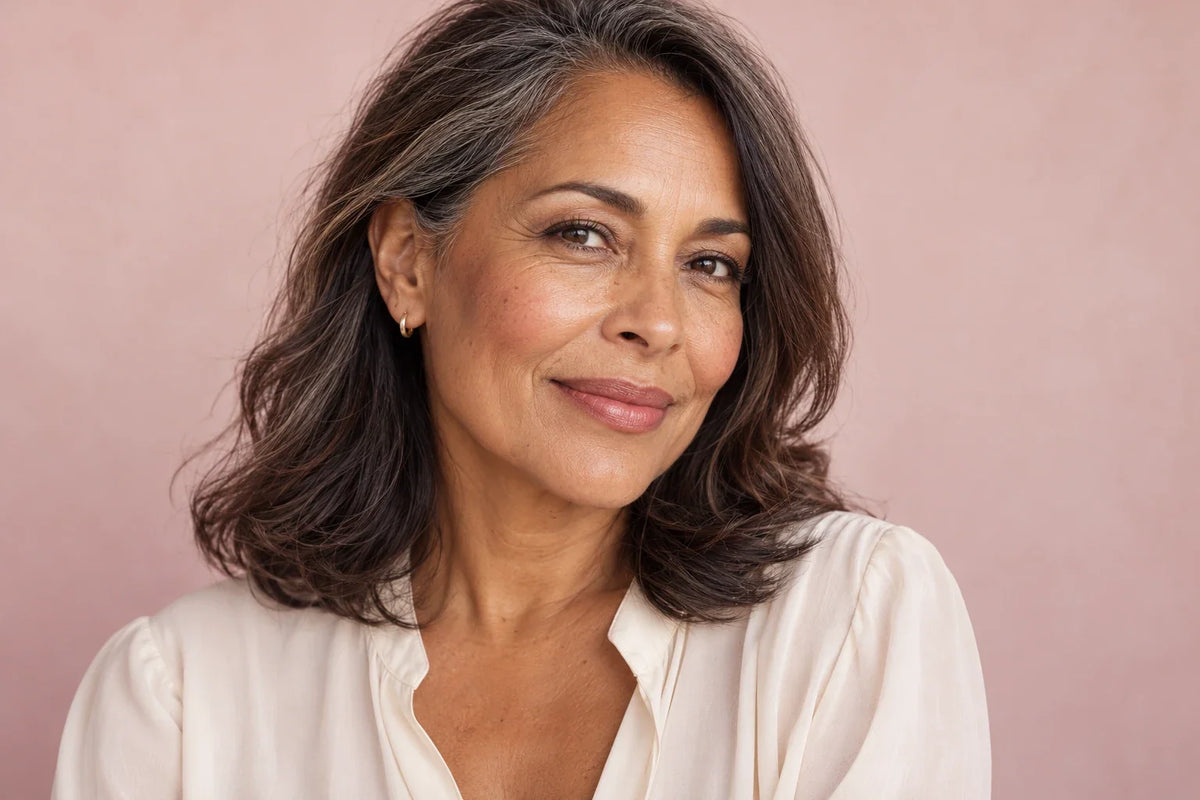
Makeup for mature skin: tips for a fresh, natural look
Makeup for mature skin often looks best in thin layers, with targeted coverage and soft transitions. Adapt the formula to how your skin feels today. You do not need to cover every line or replace your favourite colours: a different amount or placement can make a difference.
Around 45 or 50, you may notice your usual foundation settling into lines sooner, powder looking drier or eyeshadow becoming less visible with open eyes. This does not automatically call for a completely new makeup bag. This guide helps you adjust your routine step by step, with room for the colours and finishes you enjoy.
Which makeup suits mature skin?
The best choice depends on your skin type, desired coverage and personal taste. Mature skin can be dry, oily or combination. Age alone does not determine whether you need liquid foundation, cream blush or powder.
If your skin feels dry or tight, start with comfortable skincare and see whether a thin, flexible base feels better. If your T-zone is mainly shiny, use some powder there. You do not need to treat your whole face the same way.
| What do you notice? | Try this first |
|---|---|
| Foundation collects in lines. | Use less product there and dab away build-up. |
| Your cheeks look dry after powdering. | Powder only where needed, or try another formula. |
| Blush creates an obvious patch. | Pick up less with your brush and focus on blending the edges. |
| Highlighter emphasises texture you would rather soften. | Limit it to a smaller area or choose subtler shine. |
| Eyeshadow disappears when you open your eyes. | Check placement while looking straight ahead. |
Which foundation suits mature skin?
A lightweight liquid foundation with buildable coverage is a practical starting point. Choose the formula and finish for your skin type and desired look. Mature skin does not automatically need full-coverage or very dewy foundation.
- Dry skin: try a hydrating formula with a natural or satin finish. Satin provides soft shine without obvious shimmer. Check that foundation stays comfortable and does not cling to dry patches.
- Oily or combination skin: a naturally matte finish may suit you if you want less shine. Assess dry cheeks and a shiny T-zone separately; you may only need powder on the T-zone.
- Need little coverage: choose light coverage and touch up locally with concealer. For more evening out, build medium coverage thinly. A fuller-coverage formula can also work when used selectively.
Do not judge foundation only immediately after application. After a few hours, check how it sits around your nose, mouth and under your eyes. A formula that stays comfortable and moves well with your skin matters more than ‘anti-ageing’ on the packaging.
How do you stop foundation and concealer settling into fine lines?
Start with a little product, add coverage only where needed and remove excess before setting. No foundation prevents every crease or skin movement. A thin layer is easier to touch up than a thick one that collects.
- Prepare your skin. Use your usual skincare and let it absorb briefly. A still-wet or very slippery base makes even application harder.
- Spread a small amount of foundation. Work outwards from where you want coverage. Keep the layer thinner towards the hairline and jaw.
- Use concealer selectively. Place a little on discolouration or in the shadow beside your inner eye corner. A broad triangle under the whole eye is unnecessary if you do not want coverage there.
- Check your skin after a few minutes. Gently dab away product in a line with a clean finger, brush or sponge. Do not immediately add another layer over it.
- Powder locally. Use a little where makeup moves or shines more than you want. Dry cheeks do not automatically need powder.
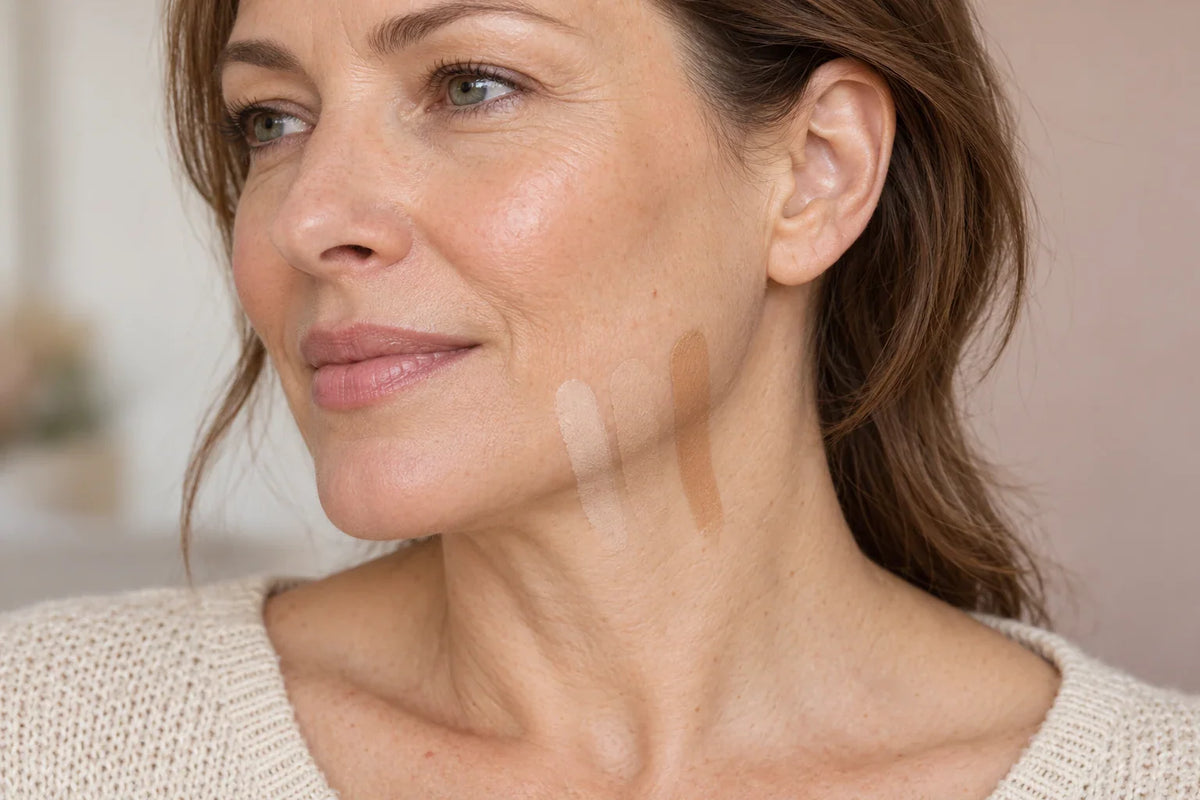
Check your shade along the jaw in daylight. Test a suitable shade rather than choosing darker foundation for more colour; blush or bronzer gives more control over placement.
Are fine lines still visible? That is normal skin texture. The goal is a comfortable, even makeup look, not a motionless or smoothed-out face.
Which blush looks good on mature skin: cream or powder?
Both cream and powder blush can look beautiful. Cream may suit a supple finish. Powder is useful for building colour gradually. Consider how the formula behaves on your skin, not only its label.
Apply blush with a light hand. Start with a little colour on the part of the cheek you want to emphasise and blend the edges towards the cheekbone. Check placement with a relaxed face. No mandatory height suits every face shape.

For a soft pink matte finish, Girly Girl Powder Blush is one example from our collection. Heart Eyes Powder Blush has a warm peach shade with subtle golden shimmer. Do not choose by age alone: your undertone and preferred colour intensity matter too.
On deeper skin, richer pink, berry or terracotta may show more clearly than a very light pastel. Test the colour and build gradually. Find more help in which blush suits me?
How do you use highlighter with fine lines?
Use a small amount and deliberately choose where you want the light to fall. Shine can reveal skin texture. If you dislike that in one area, skip it there without removing highlighter from your routine entirely.
Start on a small area at the top of the cheekbone. Keep shine away from beside the eye if you do not want extra attention there. Turn your face slightly left and right in daylight: highlighter looks different from every angle. Fine shimmer creates a different effect from clearly visible glitter.

Our Bronze Glow Cloud Highlighter has a deep bronze shade with warm shine. Whether it suits you depends on your skin tone and desired effect. For more placement options, see the guide applying highlighter.
Which eye makeup suits women around 50?
Eye makeup that suits your eye shape and remains visible when looking ahead is a good starting point. Both matte and shimmery eyeshadow are options. There is no age at which shimmer, eyeliner or dark colour suddenly becomes off limits.
For a soft start, use a matte mid-tone to gently emphasise the shape. Add a small shimmer accent on the visible lid if desired. In The Ultimate Nude Eyeshadow Palette you will find six matte and three shimmer shades, allowing you to combine both finishes.
Regularly look straight ahead in the mirror as you apply. With hooded eyes, colour intended to remain visible above the crease is best placed with open eyes. Find detailed steps in our guide to eye makeup for hooded eyes.
A thin line close to the upper lashes can define the eyes without taking much lid space. Brown often creates softer contrast than black; choose what you like.
How do you apply lip makeup when the lip outline is less defined?
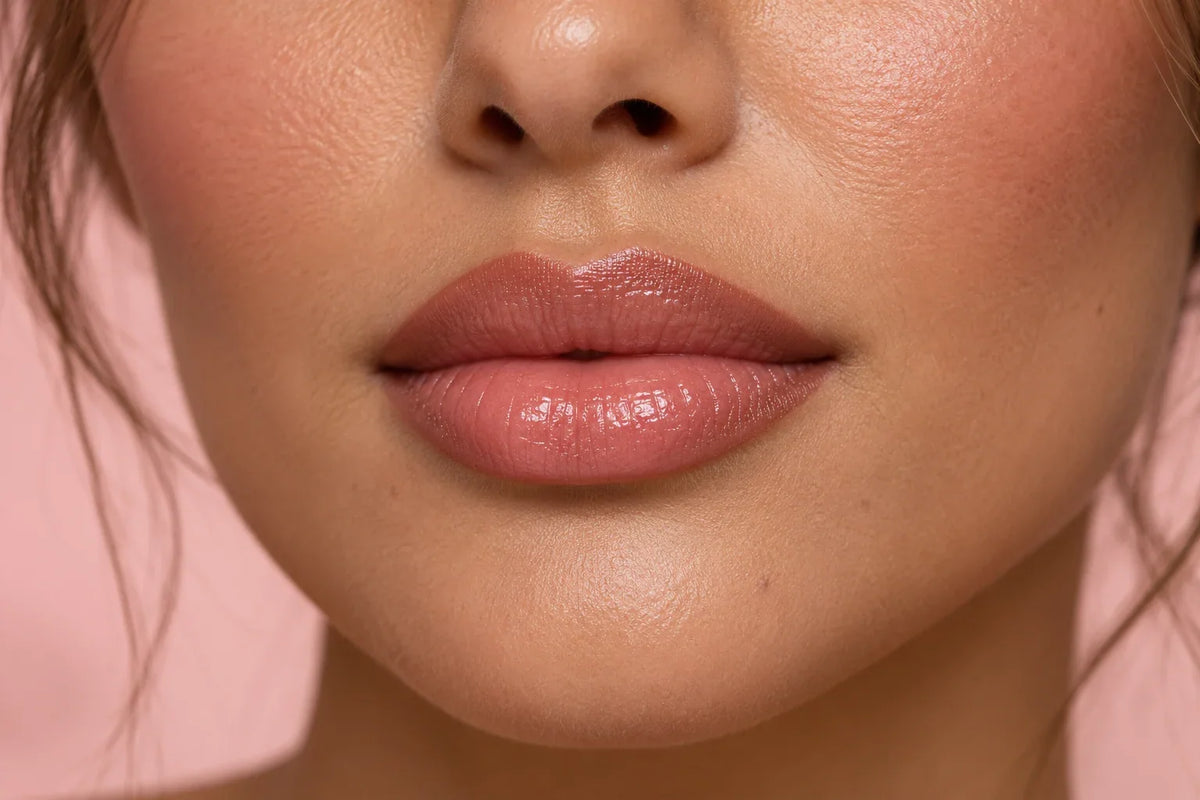
Follow your natural lip line with a sharp lip pencil and apply lip colour in thin layers. Start at the Cupid's bow and use short strokes towards the corners. Lip liner can help define the edge, but does not guarantee every lipstick or gloss will stay in place all day.
If your lips feel dry, use your usual lip care beforehand. Blot away a thick, slippery layer before applying colour. For extra shine, place a little gloss in the centre; keep the amount modest along the outer edge.
Red or deeper lip colours can look beautiful around 50 too. You do not automatically need to switch to a light nude. Look for a colour that contrasts pleasantly with your skin. See our steps for applying lip liner if you want more help with the outline.
Adjust one part of your routine first
Tomorrow, use the same products but change one thing: less foundation under your eyes, powder only on the T-zone or a smaller highlighted area. Check the result in daylight and later in the day. This helps you discover what works without buying new products straight away.
Want to review your routine's order too? Our guide makeup for beginners takes you from preparation to lip colour.
Frequently asked questions about makeup for mature skin
Do you need special makeup from age 45 or 50?
No. There is no fixed age when you need different makeup. Consider changes you notice, such as dryness, shine or products settling into lines. If your current products feel comfortable and apply beautifully, you do not need to replace them.
Can you create a fresh look without foundation?
Yes. Skip foundation and use a little concealer only where you want coverage. Blush, eye makeup or lip colour may then be enough for your desired appearance. A full-coverage base is not essential.
Is matte makeup suitable for mature skin?
Yes. Matte does not automatically mean dry or heavy. A thin layer of matte blush or eyeshadow can work beautifully. With foundation and powder, focus on comfort and avoiding more coverage than you want.
How do you touch up makeup without creating a thick layer?
First assess what is needed. Gently blot unwanted shine and remove product collected in a line. Then apply something only locally. Powdering the whole face again is often unnecessary.

Leave a comment
This site is protected by hCaptcha and the hCaptcha Privacy Policy and Terms of Service apply.