

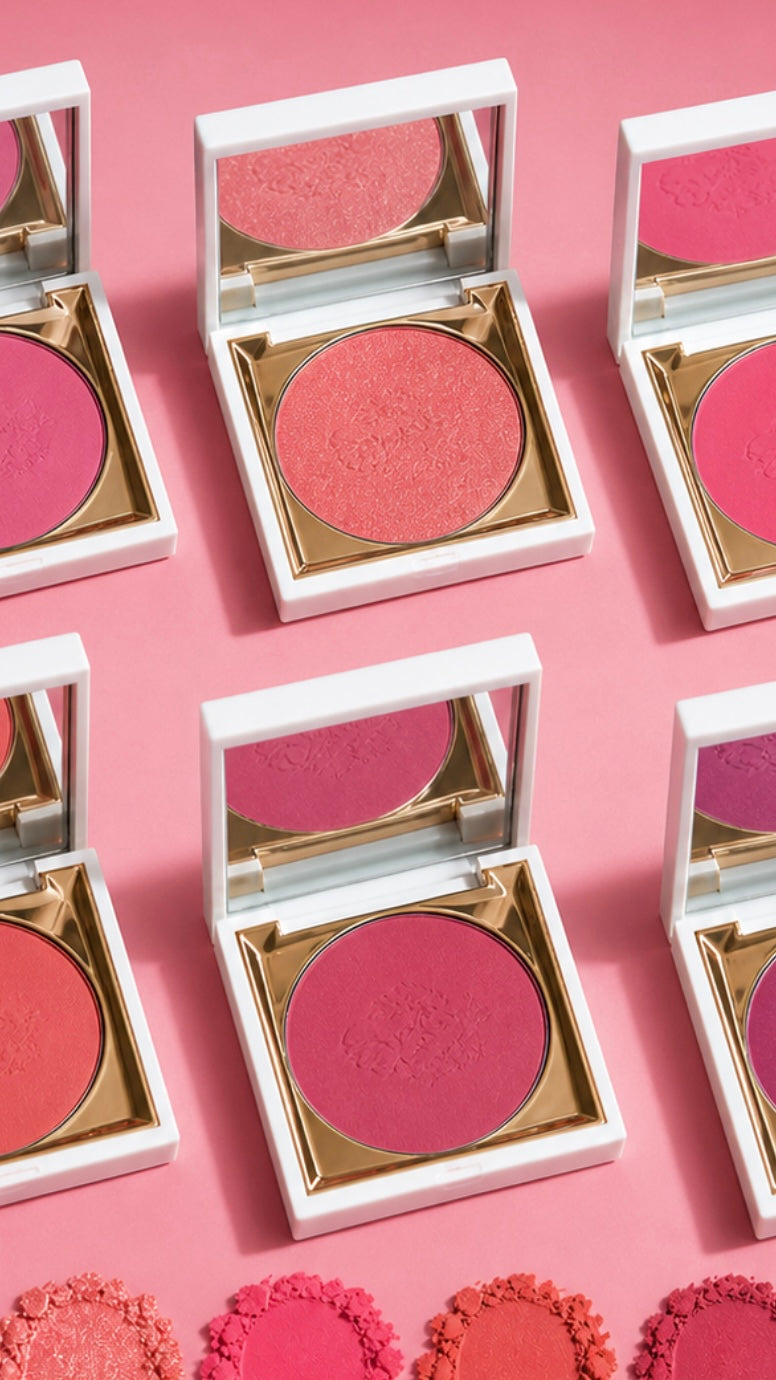
Which blush suits me? Choose the right colour and texture
The blush that suits you depends on your skin tone, undertone and the look you want to create. Cool pink and mauve are good starting points for cool undertones; peach and terracotta suit warm undertones. Then choose a texture that works well with your skin and makeup: powder, cream or liquid blush. Your taste comes first: these tips help you choose without suggesting there is only one right colour.
Unsure whether to choose a soft pink flush, a warm peach shade or a deeper mauve? This guide explains what to look for. You will also find the six By Dash Beauty powder blush shades side by side.
Which blush colour suits my skin tone?
Your skin tone refers to how light or deep your complexion is. Your undertone is the cooler, warmer or more neutral colour nuance in your skin. They are two different things: both light and deep skin can have a cool undertone, for example.
Also consider contrast when choosing blush. A very light shade may look different on deep skin than it does in the compact. An intense shade can look beautiful on light skin when applied sparingly. Judge the colour after blending it.
Blush for light skin
Looking for a soft, natural flush? Start with light pink, soft dusty rose or peach. Pick up a little product with your brush and build gradually. You do not have to avoid bright or deep colours: a thin layer may give exactly the fresh accent you want.
Blush for medium skin
Rosy pink, coral, peach and terracotta are beautiful colours to compare. For a subtle look, choose a shade that blends softly into your skin. For more contrast, try a brighter pink or a richer berry shade.
Blush for dark or deep skin
Deep pink, mauve, berry, terracotta and reddish blush offer options ranging from soft to bold. Consider both the pigmentation and how the colour develops. Does a blush look too pale or ashy for the look you want? Compare a richer shade or a formula with less pale coverage. A bright pink can also create beautiful contrast.

Which blush suits my undertone?
Use your undertone as a starting point for comparing colours. A shade in the same colour family may blend quietly with your skin, while a contrasting colour can create a more striking effect.
| Undertone | Colour family | What can you compare? |
|---|---|---|
| Cool | Cool pink, mauve and berry shades | A fresh pink for more contrast or a softer mauve for an understated look. |
| Warm | Peach, coral and terracotta | A lighter peach alongside a richer terracotta, depending on your skin tone and desired intensity. |
| Neutral | Pink, dusty rose and peach | A warmer and a cooler shade. See which complements the rest of your makeup best. |
| Olive tones | For example, muted pink, mauve or terracotta | Compare on your skin: an olive tone can occur alongside a warmer, cooler or more neutral undertone. |
How do I identify my undertone?
Look at your skin without coloured makeup in soft daylight and compare it with your neck. If you mainly notice a pink or cooler nuance, start with cool pink or mauve. With a golden-yellow or warmer nuance, try peach or terracotta. Neither is obvious? Compare a warm and a cool blush side by side.
The colour of your veins or your preference for gold or silver jewellery does not have to decide for you. Focus on the effect the blush creates on your face. You do not need to name your undertone precisely to find a colour you like.
Powder, cream or liquid blush: what is the difference?
The texture mainly determines how you apply and build up the blush. The finish varies by product. A cream blush may dry matte, while a powder blush may contain shimmer. Consider both the formula and the described result.
| Texture | How to use it | What to keep in mind |
|---|---|---|
| Powder blush | Pick up some product with a brush, tap off the excess and apply thin layers. | May suit you if you like using a brush or already use powder. A very sticky base can cause powder to adhere more strongly in patches. |
| Cream blush | Dab a small amount onto your cheeks with clean fingers, a sponge or a suitable brush. | Often works well before a finishing layer of powder. The finish can be dewy, natural or matte. |
| Liquid blush | Start with a small dot and blend it. Add more only after assessing the first layer. | Pigmentation and drying time vary considerably. With a fast-drying formula, it is helpful to work on one cheek at a time. |
Which blush should you choose for dry skin?
A smooth-feeling cream blush may be comfortable, but powder is not automatically ruled out. Prepare your skin with your usual skincare and use thin layers. Check whether the blush sits evenly and feels comfortable. A thicker layer does not automatically give a better result.
Which blush should you choose for oily or combination skin?
Powder blush can be practical if you enjoy working with powder or want a matte finish. Cream and liquid can work too, depending on the formula. Assess the blush with your usual base, as skincare, foundation and setting powder affect the result. With combination skin, you do not need to apply the same amount everywhere.
Matte blush or blush with shimmer?
If you mainly want to add colour, matte blush is a sensible starting point. For a light-reflecting accent on your cheeks, compare blushes with shimmer. You can also combine matte blush with a little highlighter where you want extra shine.
Which By Dash Beauty blush suits me?
By Dash Beauty Powder Blush is a pressed powder blush with buildable colour. The collection contains six shades. Below, compare their colour families and finishes so you can explore the relevant product images.

| Blush shade | Colour family | Finish |
|---|---|---|
| Girly Girl | Soft, fresh pink | Matte |
| Heart Eyes | Warm peach | Subtle golden shimmer |
| Pretty Era | Deeper, richer pink | Matte |
| Ur Crush | Warm terracotta pink | Matte |
| Real Cute | Dusty rose with a subtly warm undertone | Matte |
| Iconic Her | Deep mauve pink | Matte |
Here is how to start comparing: for soft pink, explore Girly Girl. For a deeper, richer pink, consider Pretty Era; for dusty rose with a subtly warm undertone, try Real Cute. If you like warmth, compare the shimmery peach of Heart Eyes with the matte terracotta pink of Ur Crush. For deep mauve pink, Iconic Her is the shade to explore.
This guidance is based on colour and finish, rather than fixed rules for different skin tones. A light hand lets you wear an intense colour subtly; building it up makes the flush more pronounced. View the current blush collection and availability once you have found your favourite.
How to choose and try a blush in five steps
- Decide on your desired look. Do you want a soft flush, a warm appearance or a striking pop of colour?
- Choose two colour families to compare. For example, fresh pink and peach, or terracotta and mauve. This makes it easier to see what you like than simply looking at the compact.
- Use your usual makeup base. Do you normally wear foundation or powder? Assess the blush with that combination. If you prefer skincare alone, try it that way.
- Apply a little and blend the edges. For powder, tap excess product off your brush. For cream or liquid, start with a small amount and dab the colour out.
- Look at the result in daylight. Assess your whole face before adding another layer. Later in the day, check whether you still like the colour, finish and feel.
An arm swatch can help compare shades. The final blush look is best assessed on your cheeks, with the amount and base you actually want to wear.
Frequently asked questions about choosing blush
Is blush the same as rouge?
Yes, blush and rouge usually refer to the same makeup product: colour for your cheeks. Both names can be used for powder, cream and liquid formulas.
Can I wear blush without foundation?
Yes. You can apply blush without foundation. Let your skincare absorb first, start with a little product and check that the colour blends evenly. You do not need to add foundation if you do not want to wear it.
Is cream blush better than powder blush?
No texture works better for everyone. Cream may suit you if you like dabbing product on; powder if you prefer building thin layers with a brush. Compare the actual formula, finish and how it works with your base. The word cream or powder alone does not tell you how a blush will look on you.
Which blush suits mature skin?
Consider how your skin feels and the effect you like. A smooth-feeling formula and thin layers can work well. Both cream and lightly applied powder can suit you. Assess on your own skin whether you prefer a matte finish or some shine.
Why does my blush look patchy?
An uneven base, too much product at once or a fast-drying formula may contribute. Let your base settle first, use a small amount and blend one layer at a time. With a fast-drying liquid blush, try working on one cheek at a time.
Want to explore placement and technique step by step? Read our guide to applying blush and preventing patchiness.
Does my blush need to match my lipstick?
It does not have to. Colours from the same warm or cool family can create a harmonious look, but contrast can be beautiful too. Look at your blush alongside your lip colour and eye makeup, and choose the combination you feel comfortable with.
Ready to compare? Explore the By Dash Beauty powder blushes and choose the colour family and finish you want to try first.


Leave a comment
This site is protected by hCaptcha and the hCaptcha Privacy Policy and Terms of Service apply.