

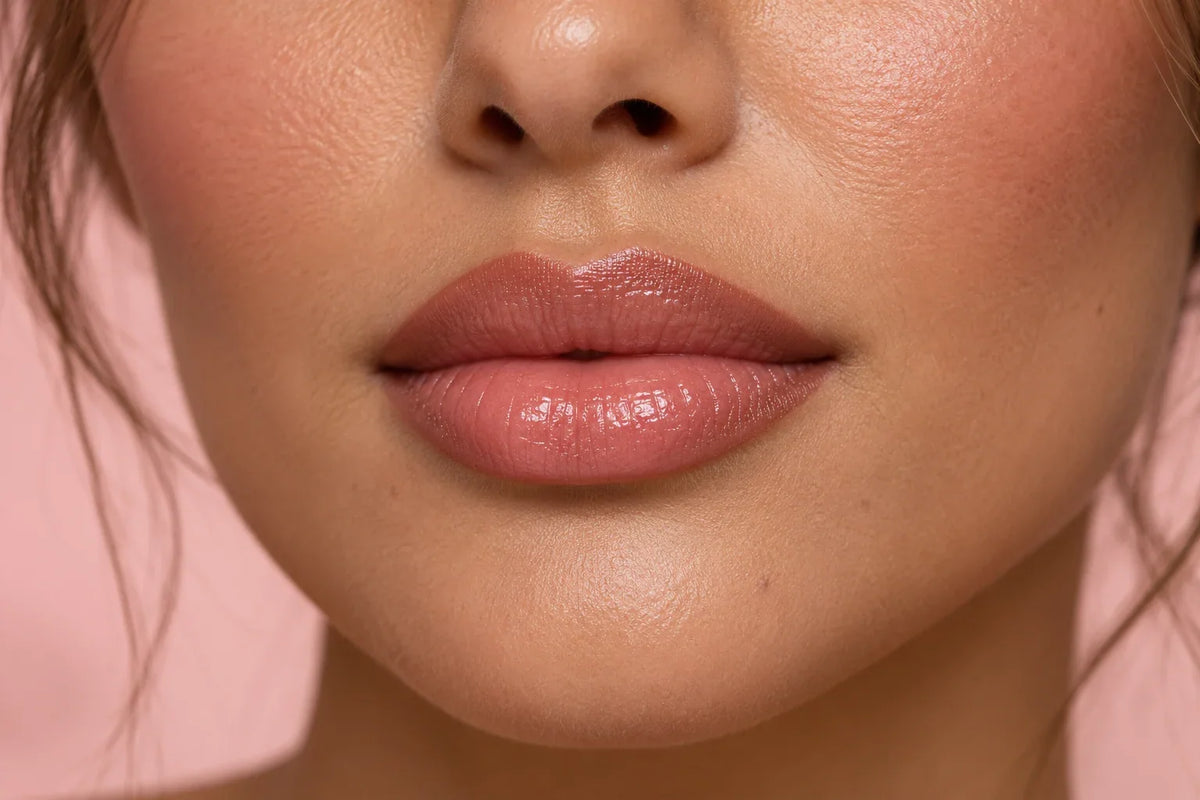
Applying lip gloss: steps and tips to prevent bleeding
Apply lip gloss in a thin layer, working from the centre of your lips outwards. Use little product at the lip line and corners. Wear gloss alone or pair it with lip liner and lipstick.
A soft daytime shine or a striking lip look for a night out? The same gloss can create different effects. Below, learn to adapt the amount, placement and combination to the result you like.
What is lip gloss and what does it do?
Lip gloss is makeup that adds shine to your lips. Formulas can be clear or coloured, with or without shimmer. The amount of colour, shine and coverage varies by product.
Light reflection can make your lips appear fuller. This is a visual effect: ordinary lip gloss does not enlarge your lips.
Applying lip gloss in five steps
1. Start with clean lips
Remove any previous lip colour. Do your lips feel dry? Apply a little balm if needed and let it sit briefly. Blot excess balm before continuing so you do not layer several thick products.
Do not pull at flakes. You do not need to exfoliate your lips every time for a beautiful look.
2. Use lip liner if desired
Want a clearer outline? Draw along your natural lip line with liner first. Use short strokes and blend the line slightly inwards.
A shade close to your natural lip colour creates a soft transition. A darker liner makes the outline more visible. Both can look beautiful; choose how much contrast you want.
For the complete technique, read our guide to applying lip liner.
3. Pick up a little gloss
Use a small amount on the applicator. You do not need fresh product for every movement.
The amount you need depends on the applicator and formula. Assess the first layer before picking up more.
4. Start in the centre and spread outwards
Place gloss in the centre of your lower lip and spread towards the sides. Then apply a thin layer to your upper lip.
Work gently towards the outline and use as little product as possible at the corners. Mainly want a glossy accent? Keep most of the gloss in the centre.
Wearing lip liner or lipstick? Minimise back-and-forth movements to avoid disturbing the underlying colour.

5. Check the edge and corners
Also check your lips with a relaxed mouth. Is product collecting anywhere? Carefully remove the excess with a clean cotton bud.
What goes first: lip liner, lipstick or lip gloss?
A practical starting order is lip liner, then lipstick, then lip gloss. Not every step is needed: gloss alone is a complete lip look too.
| Desired result | Order |
|---|---|
| Shine with little preparation | Lip gloss |
| Shine with a defined outline | Lip liner → lip gloss |
| More colour with a glossy finish | Lip liner → lipstick → lip gloss |
| A subtle glossy accent | Lipstick → a little gloss in the centre |
Using liquid matte lipstick? Let it dry first as directed. Gloss can change the matte finish and wear. Test a small amount first; a glossy layer does not automatically preserve your lipstick's original staying power.
Also see our guide to applying liquid lipstick.
How do you prevent lip gloss bleeding?
Work in thin layers and keep the lip line and corners free from excess product. A thick layer can move more easily while talking, eating and drinking.
Try these adjustments if gloss moves outside the outline:
- Blot away excess balm before starting.
- Use less gloss and concentrate shine in the centre.
- Optionally draw your outline with lip liner as a guide.
- Check for product in the corners after application.
Lip liner is not a guaranteed barrier against bleeding. The product combination and amount still matter.
What can you do if lip gloss feels too sticky?
Start with less product. A thick layer may feel heavier or stickier than a thin one. Carefully blot away excess and reassess the feel.
Still too sticky for your preference? A different formula may suit you better. Lip oil is not automatically lighter or less sticky: that also varies by product.
How do you keep lip gloss looking good for longer?
No fixed wear time applies to every lip gloss. The formula, amount, eating and drinking affect how the shine and colour last.
For a polished lip look:
- Start with a thin, even layer.
- Check where product remains after eating or drinking.
- Gently remove loose or accumulated residue.
- Touch up only where shine or colour is missing.
Using coloured gloss with lip liner? Also check the transition between the outline and centre of your lips.
Which lip gloss suits your look?
Choose your desired effect first. Your natural lip colour influences how clear or lightly coloured gloss looks.
| Your preference | What can you compare? |
|---|---|
| Your natural lip colour with extra shine | A clear gloss |
| A soft everyday lip look | A subtly tinted gloss |
| More colour without a matte finish | A more pigmented gloss |
| A light-reflecting accent | A gloss with shimmer |
Explore the By Dash Beauty lip glosses and compare shades and product images. Need help choosing a colour first? Read which lip colour suits you.
Two lip looks with By Dash Beauty
A light pink shimmer with Pink Sparkle. Pink Sparkle Lip Gloss has a clear base, subtle pink tint and light shimmer. Wear it alone to let your natural lip colour show through with a sparkling accent.
A brown outline with a nude beige gloss. Pair the dark brown Cocoa Crush lip liner with Naked Lip Gloss, a nude beige gloss with full coverage and a glossy finish. Blend the liner inwards first and apply Naked from the centre. Work carefully towards the outline to control how much brown remains visible.
These are combinations to try. Your natural lip colour, amount applied and lighting affect the result. The close-ups in this article show technique, not colour swatches of these products.
What is the difference between lip gloss and lip oil?
Lip gloss mainly provides shine and possibly colour. Lip oil is generally offered as an oil-like lip formula that can also add shine and colour. The categories overlap: the name alone does not reveal how sticky, conditioning or long-lasting a product is.
Consider the specific formula's properties and the result you want. Read more in our guide to lip oil and how it differs from lip gloss.
Frequently asked questions about lip gloss
Can you wear lip gloss without lipstick?
Yes. Apply gloss directly to clean lips. Clear gloss shows your natural lip colour; tinted gloss adds colour.
Should you rub your lips together after applying it?
You do not have to. Spread gloss with the applicator. Excessive rubbing can move the lipstick or liner underneath. Instead, use a mirror to check where a little more product is needed.
Does lip gloss make your lips fuller?
The shine can make your lips look fuller. Ordinary lip gloss does not change their size. Any plumping effect should be stated in the specific product information.
Why does lip gloss collect in the corners of my mouth?
You may have applied too much, or it may have moved during wear. Gently remove the excess and try less product at the sides next time.
How do you remove lip gloss?
Use a remover suitable for lip makeup and follow the packaging. Remove gloss with gentle movements. If you wear long-lasting lipstick or liner underneath, choose a remover suitable for that too.
Ready to choose your lip look? Compare shades and finishes in our lip gloss collection.


Leave a comment
This site is protected by hCaptcha and the hCaptcha Privacy Policy and Terms of Service apply.